15 Best Gut Health Supplements For a happy Gut
If you are not consistently eating a healthy diet composed of whole foods, such as vegetables, fermented foods, and omega-3 fats, your gut may not be receiving all the nutrients it needs to maintain your health.
Thank you for reading this post, don't forget to subscribe!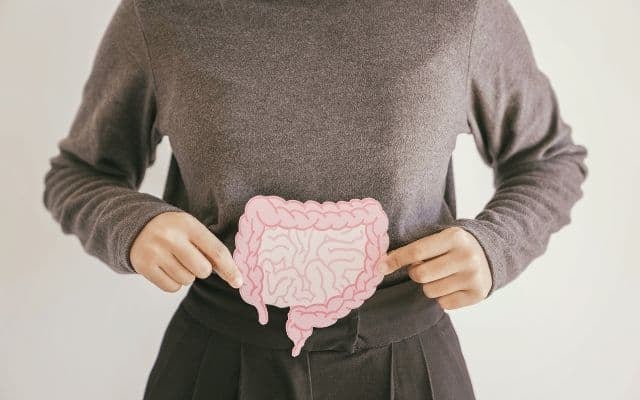
In such cases, gut health supplements can help bridge the gap.
We’ve all been there. Those days when your gut just doesn’t feel right.
Maybe it’s bloating, sluggish digestion, or that uncomfortable “off” feeling in your stomach.
And if you deal with chronic gut issues like IBS, Crohn’s, or persistent digestive discomfort, you know just how much it can interfere with everyday life.
A happy gut is essential not just for digestion, but for energy, mood, and overall well-being.
At the center of it all is your gut microbiome. These are the trillions of bacteria, fungi, and other microorganisms living in your digestive tract.
Think of it as a bustling ecosystem that influences everything from how well you absorb nutrients to how strong your immune system is.
In fact, those microscopic bugs may even influence your actions, such as food choices you crave, especially if you have a leaky gut, research shows.
When this delicate balance gets disrupted, it can lead to digestive struggles, inflammation, and even impact your mental health.
That’s where gut health supplements can play a valuable role.
While they’re not a magic fix on their own, the right supplements can help restore balance, support the gut lining, reduce inflammation, and feed the beneficial bacteria your microbiome needs to thrive.
Combined with a nourishing diet and lifestyle, they can make a big difference in creating a healthier, happier gut.
Reasons Why a Healthy Gut Matters
A healthy gut isn’t just about comfortable digestion. The gut plays a role in nearly every aspect of your well-being. Here’s how:
- Stronger immunity: Around 70% of your immune system lives in your gut, helping defend against illness.
- Better digestion & nutrient absorption: A balanced gut helps your body break down food and absorb vitamins and minerals more efficiently.
- Improved mental health: The gut-brain connection means a thriving microbiome can boost mood and reduce anxiety.
- Clearer, healthier skin: Gut balance helps reduce inflammation, which can support skin conditions like acne and eczema.
- Balanced hormones: A healthy gut aids in metabolizing and regulating hormones, which affects everything from energy to menstrual cycles.
- Healthy weight management: Certain gut bacteria play a role in metabolism and appetite control.
- More energy: Proper nutrient absorption and reduced inflammation mean less fatigue and more vitality.
- Reduced inflammation: A balanced microbiome helps calm systemic inflammation, lowering the risk of chronic disease.
Now that we’ve seen just how much your gut influences everything from your skin to your mood, it’s clear that taking care of it is worth the effort.
While a nutrient-rich diet, stress management, and good sleep form the foundation of gut health, supplements can give your digestive system that extra support it needs.
Let’s take a look at some of the best supplements to nourish your gut, strengthen your microbiome, and keep your digestion running smoothly.
Best Gut Health Supplements
Probiotics
Probiotics are live microorganisms, often called “good bacteria. ” They help balance your gut microbiome.
Probiotics can support digestion, boost immunity, and may even play a role in mental health through the gut-brain axis.
Consider a probiotic supplement if you have these signs of probiotic deficiency.
Research suggests probiotics may help manage conditions like IBS and diarrhea (McFarland, 2015). Common strains include Lactobacillus and Bifidobacterium.
What to Look for in a Quality Probiotic
With so many probiotic supplements on the market, choosing the right one can feel overwhelming. Here are a few key things to look for:
- Strain-specific benefits – Not all probiotics are the same. For example, Lactobacillus rhamnosus GG is well studied for gut health and immunity, while Bifidobacterium 35624 is shown to help with IBS. Look for strains that match your health goals.
- Diversity of strains – A probiotic with multiple strains may better support overall microbiome balance than a single-strain option (unless you’re targeting a specific issue).
- CFU count (colony-forming units) – More isn’t always better, but a daily dose of at least 1–10 billion CFUs is typically effective. High-potency probiotics (50 billion+) may be useful for certain conditions, but check with your healthcare provider.
- Survivability – Probiotics need to survive stomach acid to reach your intestines. Look for delayed-release capsules, spore-forming strains, or products with protective delivery systems (like Seed’s nested capsule).
- Prebiotics included – Some formulas add prebiotics (the “food” for probiotics) for extra support. These are sometimes called “synbiotics.”
- Quality testing – Choose brands that are third-party tested for purity and potency to make sure you’re actually getting the strains and CFU counts listed on the label.
- Storage requirements – Some probiotics require refrigeration, while others are shelf-stable. Make sure you know how to store yours so it stays effective.
Some of the best probiotics include:
The “best” probiotic often depends on the goal (general gut support vs. IBS vs. after antibiotics), but here are some well-regarded, research-backed options:
1. Culturelle® Digestive Daily
- Contains Lactobacillus rhamnosus GG, one of the most studied probiotic strains.
- Helpful for digestive balance and immune support.
- Contains Bifidobacterium 35624, clinically studied for IBS and gut comfort.
- Often recommended for reducing bloating and irregularity.
3. Garden of Life Dr. Formulated Probiotics
- Designed by Dr. David Perlmutter, a neurologist.
- Wide variety of formulas (including women’s, men’s, mood support, and immune support).
- High CFU counts and multiple strains for microbiome diversity.
- A premium option that combines probiotics + prebiotics.
- Unique capsule design ensures the bacteria survive stomach acid.
- Backed by rigorous research and sustainability practices.
5. Florastor® (Saccharomyces boulardii)
- A probiotic yeast rather than bacteria.
- Particularly useful for diarrhea prevention, antibiotic-associated issues, and gut recovery.
6. Renew Life® Ultimate Flora
- Known for high-potency formulas with multiple strains.
- Often used for general microbiome balance and digestive wellness.
7. Jarrow Formulas Ideal Bowel Support
- Contains Lactobacillus plantarum 299v, well-studied for IBS and bloating relief.
Please note:
Not every probiotic works the same for everyone.
Strain-specific benefits matter more than just CFU counts.
It’s best to choose a probiotic that matches your health goal and, ideally, consult with a healthcare provider before starting.
Prebiotics
Prebiotics are fibers in some whole foods that feed your good gut bacteria, helping them grow and thrive.
Think of them as fertilizer for your microbiome.
Inulin, FOS, and GOS are commonly used prebiotics, and studies show they improve microbial diversity and promote overall gut health (Gibson et al., 2017).
Specifically, a study published in Foods found that prebiotics had a positive effect on;
- Colorectal cancer
- Cognitive function
- Stress, Anxiety, and depression
- Parkinson’s and schizophrenia
- Osteoporosis
- Diabetes and obesity
Saccharomyces boulardii
Unlike typical probiotics, Saccharomyces boulardii is a beneficial yeast. It’s been well studied for preventing diarrhea and supporting gut balance during antibiotic use 2019 study found.
In addition, Saccharomyces boulardii is also helpful in cases of leaky gut situations, such as those associated with irritable bowel syndrome, and is common in metabolic syndrome.
A good Saccharomyces boulardii to try is Pure Thera Pro RX Saccharomyces 10B – Saccharomyces Boulardii.
Digestive Support gut health supplements
Digestive Enzymes
Digestive enzymes are gut health supplements that help break down food into smaller, absorbable components.
This helps to reduce bloating and improve nutrient absorption.
They can be especially helpful for people with enzyme deficiencies or conditions like pancreatic insufficiency (Martinsen et al., 2019).
If you have a digestive enzyme insufficiency, the best thing is to have your health care provider prescribe an enzyme supplement.
While you can buy over-the-counter enzyme supplements, these are not regulated by the FDA.
Magnesium
Known for its role in muscle relaxation, heart health, stress, and mood health, but does so much more, magnesium is involved in over 300 biochemical reactions in the body.
Magnesium helps keep the digestive system moving smoothly and supports regular bowel movements.
A 2021 Study in Nutrients found that magnesium oxide was particularMagnesium citrate and magnesium oxide are particularly effective for constipation relief.
Magnesium citrate is also an effective supplement for constipation.
Both magnesium oxide and magnesium citrate are osmotic laxatives, meaning they draw water into the intestinal lumen, which softens stools for easy passage.
However, as with all supplements, consult your health provider for guidance.
Fiber Supplements
When diet alone doesn’t provide enough fiber, supplements like psyllium husk and acacia fiber can support healthy digestion and regularity.
Psyllium, in particular, has been shown to improve constipation and IBS symptoms, according to a 2013 study in the American Journal of Gastroentrology. Metamucil is commonly recommended and well-studied.
Gut Lining & Repair Supplements
L-Glutamine
This amino acid is one of the most important nutrients for maintaining the intestinal barrier.
The intestinal barrier is made of tightly packed cells called tight junction cells.
These can be disrupted by stress, food allergies, alcohol, antibiotics, and malnutrition, leading to leaky gut syndrome.
L-glutamate helps to repair a “leaky gut” and supports overall gut integrity.
Clinical studies suggest L-glutamine supplementation reduces intestinal permeability, which prevents intestinal contents, including bacteria, from seeping out of the lumen into the bloodstream.
Collagen (Collagen Peptides)
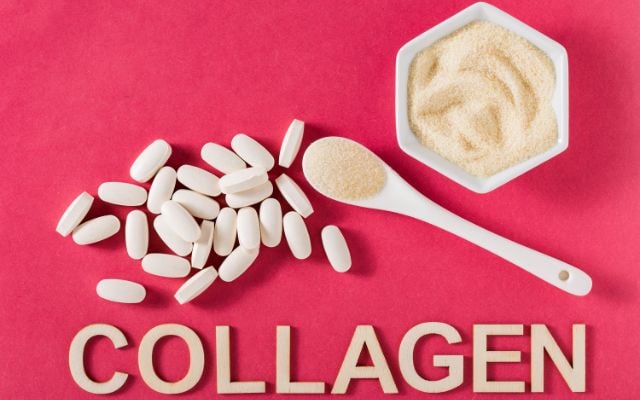
Collagen is rich in amino acids like glycine and proline that help repair and strengthen the gut lining.
An 8-week 2022 study in JMIR Formative Research found that taking 20mg of collagen peptides daily improved digestive symptoms such as bloating and other mild digestive symptoms.
While human studies are still emerging, animal research shows collagen peptides can improve gut barrier function and reduce inflammation
Zinc Carnosine
This unique form of zinc has been shown to support gut mucosal healing and reduce irritation, a 2002 study found.
A 2020 cross-sectional review of studies found zinc carnosine improved gastric lesions related to stomach ulcers and accelerated the healing process in animal studies.
This effect is likely due to its anti-inflammatory and antioxidant properties.
Vitamin D
Vitamin D plays a critical role in immune regulation within the gut and in maintaining a balanced microbiome.
Research indicates that individuals with optimal vitamin D levels are less likely to develop IBD, particularly Crohn’s disease.
Low vitamin D levels are linked to inflammatory bowel diseases and increased gut permeability, study found.
So if you are not naturally getting enough vitamin D, and many people have low vitamin D levels, according to research, supplementing may help support overall gut and immune health.
Soothing & Healing Herbs
Marshmallow Root
Marshmallow root has been used in traditional medicine for years in Lebanon and surrounding countries for inflammation, gastritis, and the common cold.
Rich in mucilage, marshmallow root forms a soothing coating along the digestive tract. This helps to fortify the gut and prevents leaky gut.
While modern research is limited, it’s been used traditionally for centuries to ease gut irritation and discomfort.
Slippery Elm
Like marshmallow root, slippery elm contains mucilage that helps coat and protect the digestive lining.
One study suggests it can help with IBS symptoms and reduce digestive discomfort, such as constipation. However, more research is needed.
Licorice Root (DGL)
Deglycyrrhizinated licorice is often used to support gut lining health. It may reduce inflammation and discomfort in the digestive tract.
A 2017 study on animal models found that licorice extract was effective in reducing inflammatory markers and reducing mucosal damage from Helicobacter pylori.
Another 2017 study found licorice improved symptoms in people with indigestion and symptoms of acid reflux and GERD.
However, exercise caution when using licorice root, as too much or large doses can cause glycyrrhizin toxicity.
Anti-Inflammatory & Overall Gut Health
Omega-3 Fatty Acids (Fish Oil or Algal Oil)
Omega-3s have powerful anti-inflammatory effects and may help reduce gut inflammation while supporting microbiome balance.
Research shows omega-3 supplementation can increase beneficial gut bacteria like Lactobacillus and Bifidobacterium, which improves gut health.
Turmeric (Curcumin)
Curcumin, the active compound in turmeric, has strong anti-inflammatory and antioxidant properties.
A 2020 study in the Journal Nutrients found that curcumin in turmeric modulated metabolic and anti-inflammatory pathways.
Additionally, curcumin was also found to alleviate liver oxidative injury by modulating the gut microbiota.
Also, researchers found that curcumin also enhanced the function of the intestinal barrier, as well as restored tight junction proteins in animal models with NAFLD(non alcoholic fatty liver disease).
Final Thoughts
At the end of the day, there’s no substitute for a nourishing, fiber-rich diet filled with whole foods, colorful fruits and vegetables, and plenty of hydration. That’s the true foundation of gut health.
But sometimes, even with the best intentions, diet alone isn’t enough. Stress, medications, underlying conditions, or simply modern lifestyles can make it harder for your gut to stay balanced.
That’s where supplements can step in to provide extra support, whether it’s probiotics to strengthen your microbiome, L-glutamine to repair the gut lining, or fiber to keep things moving smoothly.
Choosing the right supplement for your unique needs can make a noticeable difference in how your digestion feels and how energized you are overall.
Just remember: everyone’s gut is different. What works for one person may not work for another.
Before adding new supplements, it’s always wise to check in with your healthcare provider, especially if you have chronic gut issues, take medications, or manage conditions like IBS, Crohn’s, or ulcerative colitis.
Your gut plays a huge role in your whole-body health, from your skin to your mood, and taking small steps to care for it is one of the best investments you can make in your well-being.